

What is Cord Blood Banking ?
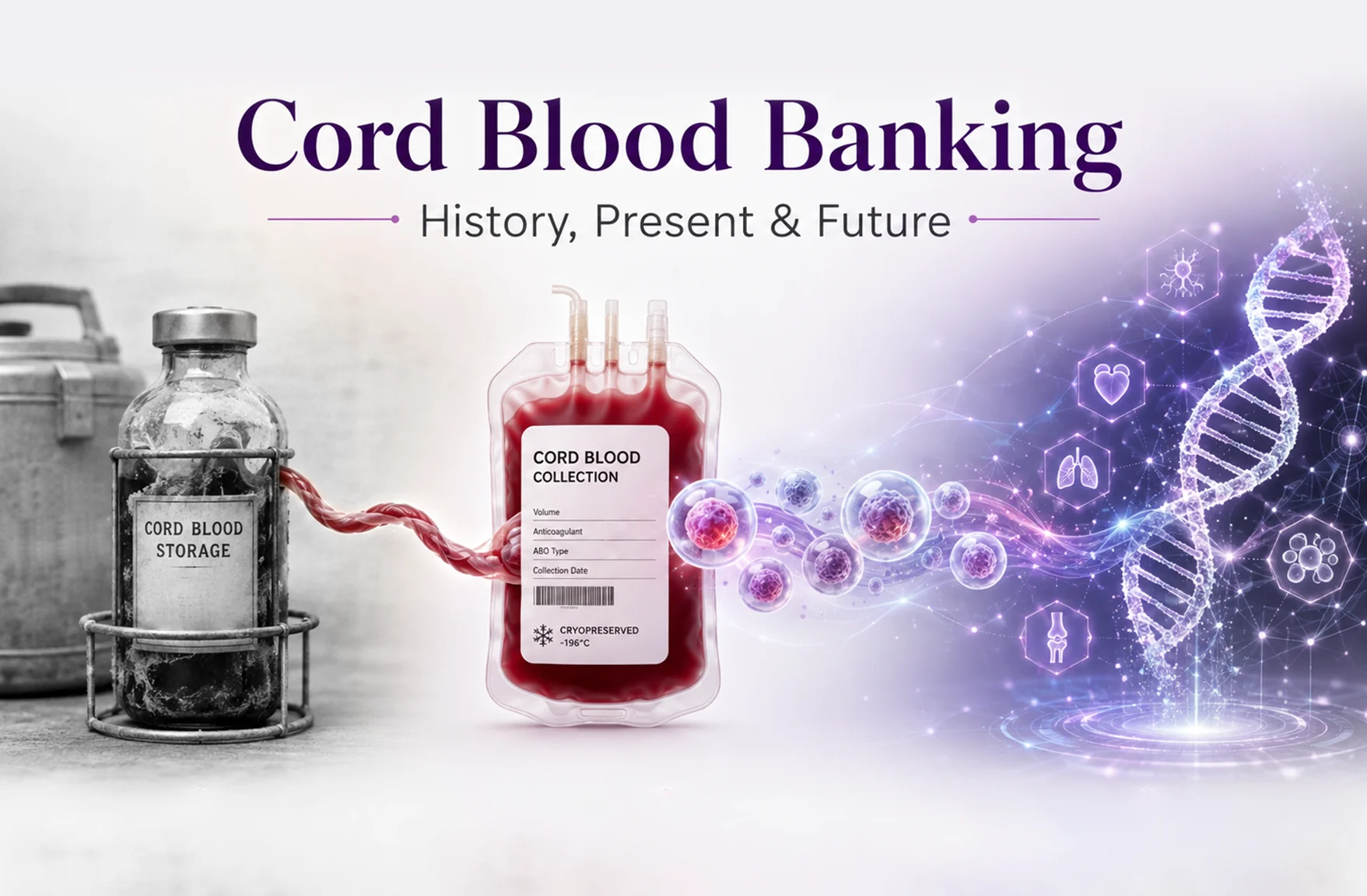
The process of collecting, testing, processing, and cryopreserving blood from the umbilical cord after childbirth is called cord blood banking. This blood is rich in hematopoietic stem cells, which are used for treating blood, metabolic, and immune disorders.
When is Cord Blood Collected ?
Umbilical cord blood is collected immediately after a child’s birth, once the umbilical cord is clamped and cut. It is a one-time opportunity and can be performed in both normal (vaginal) and cesarean deliveries. The entire process is risk-free for the mother and the baby.
Why is it necessary to do Cord Blood Banking ?
It is advised to do cord blood banking at the time of birth because:
- It is a rich source of stem cells.
- Stem cells are readily available when needed.
- The rejection rate is lower than that of other sources.
- It supports the treatment of multiple blood, immune, and metabolic conditions.
Why is Cord Blood Preservation Important Today ?
Cord blood preservation is relevant given its growing use in clinical treatments and research.
- It can be used to treat over 80+ medical conditions.
- There is growing research on stem cells as regenerative medicine
- Presently, several studies indicate the possibility of cord blood stem cells treatment in thousands of transplants worldwide, with an expanding therapeutic scope.

Cord Blood Banking Process Explained
The entire process involves 5 key steps:
1. Collection
- The umbilical cord blood is collected immediately after delivery.
- It is safe and non-invasive.
2. Transportation
- The cord blood collected is stored in a temperature-controlled kit box.
- The kitbox is shipped and processed within stipulated timeline in an authorised laboratory.
3. Testing
- The sample is tested for Purity, Potency, Identity & Safety.
- It is also tested for cell viability and cell counts.
4. Processing
- After the testing, the cord blood is processed using StemCyte’s proprietary Plasma Depletion (PD) technology which ensure up to 99.9% cell recovery as well as final preserved volume up to 75 ml.
5. Cryopreservation
- The processed stem cells are stored at −196°C in liquid nitrogen.
- The cryopreservation enables long-term preservation.
What Diseases are Treatable with Cord Blood Treat ?
Presently, cord blood stem cells are used to treat:
- Leukemia
- Lymphoma
- Thalassemia
- Sickle cell anemia
- Bone marrow disorders and more…
Additionally, emerging research areas for the treatment include:
- Cerebral palsy
- Autism spectrum disorders
- Type 1 diabetes and many more…
Types of Cord Blood Banking
There are two types of cord blood banking:
- Private Banking: In this storage, the stem cells are stored for personal or family use.
- Public Banking: In this storage, the stem cells are donated for use by others.
Hybrid Banking: With StemCyte’s Hybrid Banking option, parents can preserve their baby’s cord blood in private bank with exclusive excess to the baby and family, and they also get free of cost access to our public bank inventory.
Is Cord Blood Banking Safe ?
Yes, cord blood collection is safe, painless, and non-invasive for both mother and baby, as it is performed after the umbilical cord is cut and does not interfere with delivery.
Why StemCyte India ?
StemCyte India is addressing some of the critical needs and gaps in the current cord blood banking environment, including processing quality, long-term storage, accessibility, and real-world availability of suitable stem cells when needed.
Key Considerations:
- Hybrid Banking Model: StemCyte India offers a unique hybrid cord blood banking model that combines private cord blood storage with access to its public cord blood bank inventory. This ensures support beyond only family-use storage, especially in situations where a matched allogeneic donor unit may be clinically required.
- FACT Accreditation: StemCyte India is the only FACT-accredited cord blood bank in India, reflecting its adherence to internationally accepted quality standards in cord blood banking, processing, storage, and release.
- Advanced Plasma Depletion Processing: StemCyte uses advanced Plasma Depletion technology, which helps preserve higher cord blood volume and stem cell viability. Its processing method can preserve up to 75 ml of cord blood volume, with up to 99.9% cell recovery
- Proven Transplant Support: StemCyte has released more than 2,300 cord blood units globally and is associated with over 350 transplant centres, reflecting its real-world experience in supporting stem cell transplantation.
StemCyte’s cord blood banking model addresses the current medical understanding that clinical usability depends on more than just storage. The availability, quality, matching possibility, processing standards, and access to suitable stem cells are equally important in real-world medical scenarios.

Conclusion :
Cord blood stem cell banking is a one-time medical opportunity that allows preservation of stem cells with proven applications in treating blood, metabolic, and immune disorders.
However, its value depends not only on storage, but on:
- Quality of processing
- Viability of cells
- Accessibility when needed








Leave A Comment