
The internet is full of opinions about cord blood banking. But how do you separate facts from fiction ?
The truth lies somewhere in between the headlines and the myths.
Cord blood banking has been a part of modern medicine for over three decades and is supported by ongoing scientific research. However, misconceptions continue to circulate, often leaving parents confused at a time when they need clear, evidence-based information.
In this article, we debunk the 10 most common myths about cord blood banking by explaining why these myths exist, what medical science says, and what every expecting parent should remember before making this once-in-a-lifetime decision for their baby and family.
Key Takeaways
- Cord blood contains hematopoietic stem cells, which produce healthy blood and immune cells.
- Cord blood collection is painless and performed only after birth.
- Stem cells are currently used in established treatments for several blood, immune, metabolic and genetic disorders.
- Parents should distinguish between proven therapies and ongoing clinical research.
- Cord blood can only be collected once—immediately after childbirth.
Quick Answer: What is Cord Blood Banking?
Cord blood banking is the process of collecting, processing, testing, and preserving the stem cells found in a newborn’s umbilical cord blood immediately after birth. These stem cells are stored through cryopreservation and may be used in case of medical emergencies.
Myth 1: “The Umbilical Cord Blood Is Just Medical Waste.”
Why this myth exists
For many years, hospitals routinely discarded the umbilical cord blood after childbirth because its medical value was not yet understood.
The scientific fact
Researchers later discovered that umbilical cord blood contains hematopoietic stem cells (HSCs)—blood-forming stem cells capable of producing healthy red blood cells, white blood cells, and platelets.
The medical importance of these cells became evident after the world’s first successful cord blood transplant in 1988, which paved the way for modern cord blood banking.
What parents should remember
The umbilical cord may no longer be needed after birth, but the cord blood stem cells it contains can be safely preserved before it is discarded.
Myth 2: “Cord Blood Collection Is Painful for the Mother or Baby.”
Why this myth exists
Many parents mistakenly believe that blood is collected directly from the baby using needles.
The scientific fact
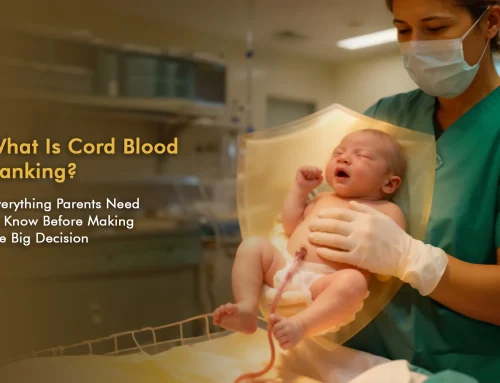
Cord blood is collected only after the baby has been delivered and the umbilical cord has been clamped and cut. The remaining blood inside the cord is collected using a sterile collection bag.
The process:
- Takes only a few minutes
- Is completely painless
- Does not interfere with childbirth
- Poses no risk to the mother or newborn
What parents should remember
Collection is safe, simple, and performed after delivery—not during it.
Quick Answer: Is Cord Blood Collection Safe?
Yes. Cord blood collection is a safe, painless procedure performed after the baby is born and the umbilical cord has been clamped and cut. It does not interfere with labour or affect the health of the mother or baby.
Myth 3: “Cord Blood Banking Is Only for Families with a History of Serious Illness.”
Why this myth exists
Healthcare planning is often associated with existing medical problems rather than future preparedness.
The scientific fact
Many parents choose cord blood banking because it preserves a valuable biological resource aka cord blood stem cells that is only available at birth. While family medical history may influence some healthcare decisions, cord blood banking is often considered a proactive choice rather than a reaction to illness.
What parents should remember
Planning ahead doesn’t mean expecting something to go wrong—it means preserving an opportunity that won’t come again.
Myth 4: “Stem Cells Can Cure Every Disease.”
Why this myth exists
News headlines about stem cell breakthroughs can create unrealistic expectations.
The scientific fact
Stem cells are currently used in established treatments for several blood cancers, blood disorders, immune deficiencies, genetic conditions and certain metabolic disorders.
Researchers are also studying their potential in regenerative medicine—a field focused on repairing or replacing damaged cells. However, many of these applications remain in clinical trials and are not yet standard treatments.
What parents should remember
Stem cell science is promising, but not every future possibility is a current medical reality.
Quick Answer: What Conditions Can Cord Blood Stem Cells Help Treat?
Cord blood stem cells are currently used in established treatments for certain blood cancers, inherited blood disorders such as thalassemia and sickle cell disease, immune deficiencies, and certain metabolic disorders. Treatment decisions always depend on a physician’s evaluation and patient suitabilit.

Myth 5: “Public, Private and Hybrid Cord Blood Banking Are All the Same”
Why this myth exists
Many parents are unaware that different preservation models exist.
The scientific fact
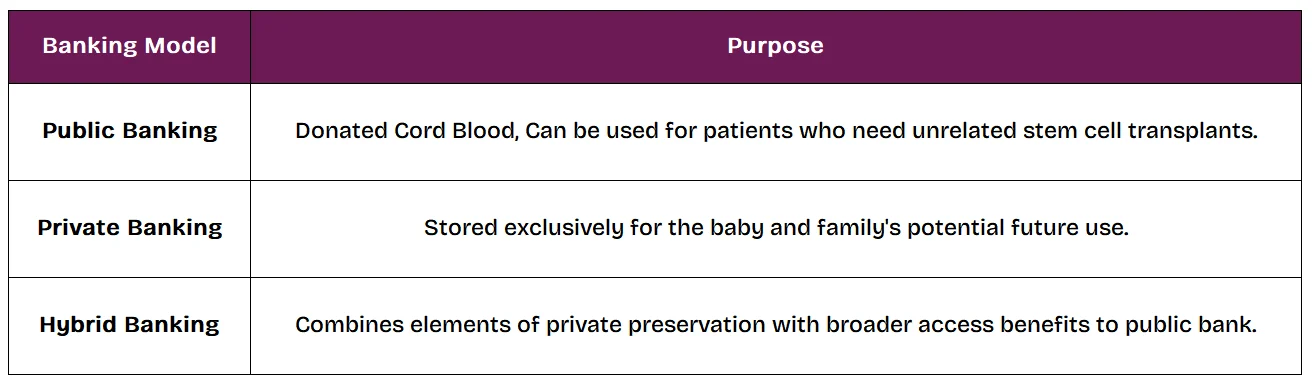
Each banking model serves a different purpose :
What parents should remember
Understanding these options helps you choose the model that aligns with your family’s priorities.
Myth 6: “Stem Cells Can’t Survive Long-Term Storage.”
Why this myth exists
Many people assume frozen cells lose their effectiveness over time.
The scientific fact
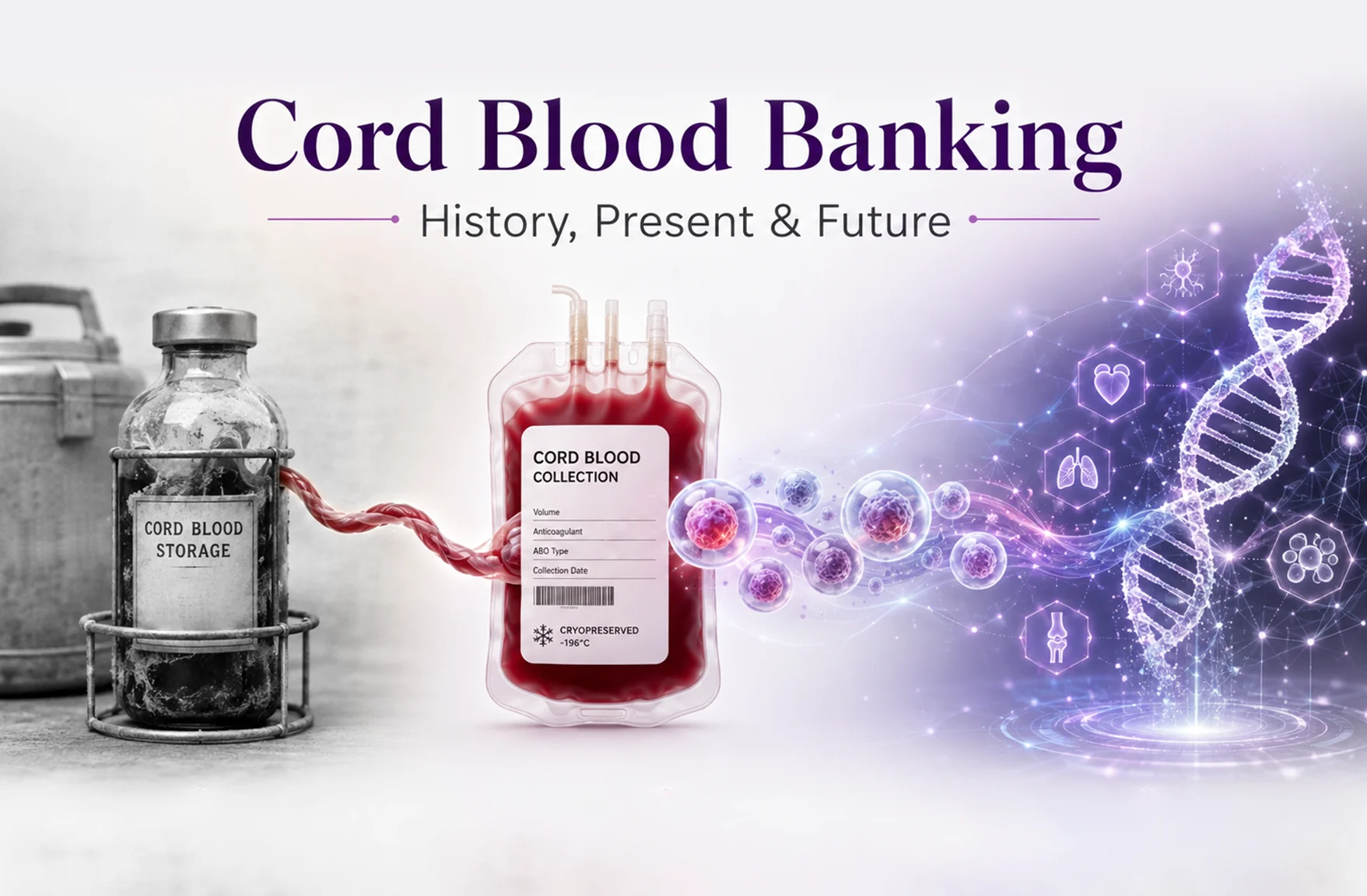
Cord blood stem cells are preserved using cryopreservation—a scientific process in which cells are stored in computerised nitrogen tanks at -196 degree Celsius.
Research has shown that stem cells can remain viable after decades of storage when preserved under appropriate laboratory conditions.
What parents should remember
Long-term preservation is made possible through carefully controlled scientific protocols.
Myth 7: “Cord Blood Doesn’t Contain Enough Stem Cells to Be Useful.”
Why this myth exists
People often confuse the amount of cord blood collected with its medical value.
The scientific fact
Every collected sample undergoes laboratory evaluation, including :
- Cell count
- Cell viability
- Sterility testing
- Quality assessment
Whether a sample is suitable for treatment depends on clinical evaluation and extraction technology — not simply on volume.
What parents should remember
Quality matters as much as quantity.
Myth 8: “I Can Decide About Cord Blood Banking After My Baby Is Born.”
Why this myth exists
Many healthcare decisions can be postponed, so parents assume this one can too.
The scientific fact
Cord blood can only be collected immediately after childbirth. Once the umbilical cord and placenta are discarded, the opportunity is lost forever.
What parents should remember
If you’re considering cord blood banking, start learning about it during pregnancy—not after delivery.
Quick Answer: When Should Parents Decide About Cord Blood Banking ?
The ideal time to explore cord blood banking is during the second or third trimester of pregnancy. This allows enough time to understand the options, discuss them with your healthcare provider, and make an informed decision before your baby’s birth.

Myth 9: “Cord Blood Banking Is Experimental.”
Why this myth exists
People often confuse ongoing stem cell research with the practice of cord blood banking itself.
The scientific fact
Cord blood banking has been part of clinical treatment since the first successful transplant in 1988. Today, cord blood stem cells are used worldwide in established transplant procedures for several approved medical conditions.
At the same time, scientists continue to explore new applications through carefully regulated clinical trials.
What parents should remember
Cord blood banking is an established medical practice supported by decades of research, even though stem cell science continues to evolve.
Myth 10: “Cord Blood Banking Is Only About Today’s Advanced Treatments.”
Why this myth exists
Parents often focus only on current healthcare needs.
The scientific fact
Scientific research continues to explore how stem cells may contribute to future areas such as regenerative medicine and personalised therapies. While many applications are still under investigation, preserving stem cells today keeps future possibilities open.
What parents should remember
Cord blood banking is about preserving a unique biological resource—not predicting future illness.
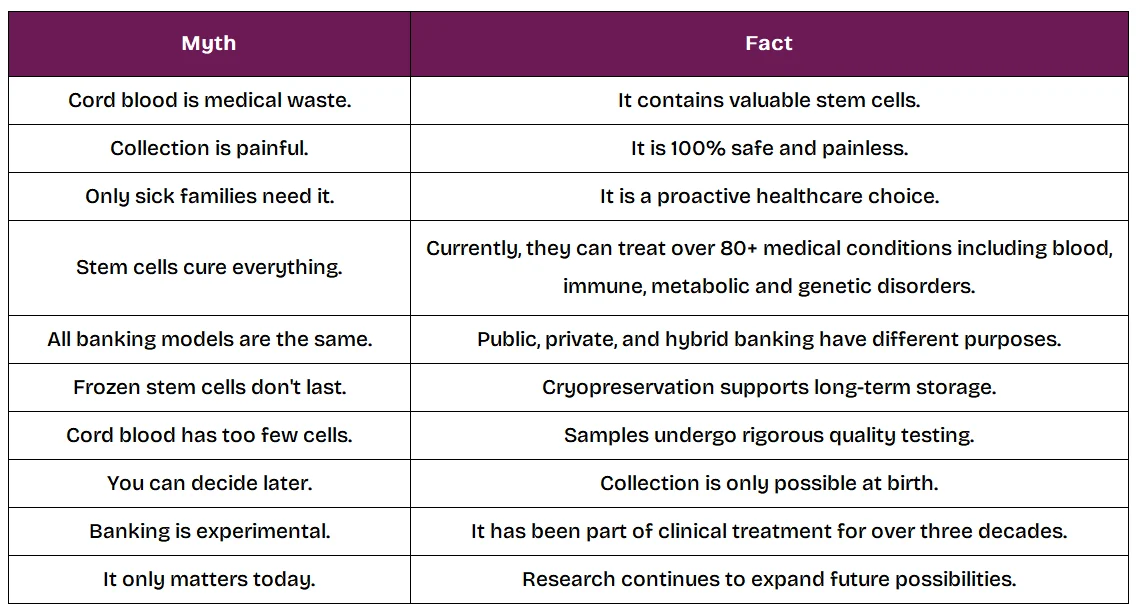
Myth vs. Fact at a Glance
Conclusion :
Myths often spread faster than facts, especially when it comes to complex medical topics like stem cell banking. But making decisions based on misinformation can mean overlooking a once-in-a-lifetime opportunity.
Cord blood banking is neither a miracle cure nor a passing trend. It is an established healthcare option supported by decades of scientific research, with ongoing studies continuing to expand our understanding of stem cells and their potential.
The best decision is always an informed one. By learning the facts during pregnancy, you can discuss your options with your healthcare provider and choose what feels right for your family.
If you’d like to learn more about public, private, or hybrid stem cell banking, connect with the experts at StemCyte.
Call 18001200086 today!







Leave A Comment