
Cord Blood Stem Cell Banking: History, Present, and Future
Although cord blood banking has existed for more than three decades, many parents still hear about it for the first time during pregnancy. Questions such as What exactly is cord blood? Why are stem cells important? Is cord blood banking scientifically proven? and How has this field evolved over the years? are completely natural.
“But did you know? The window to preserve your baby’s stem cells lasts only a few minutes after delivery.”
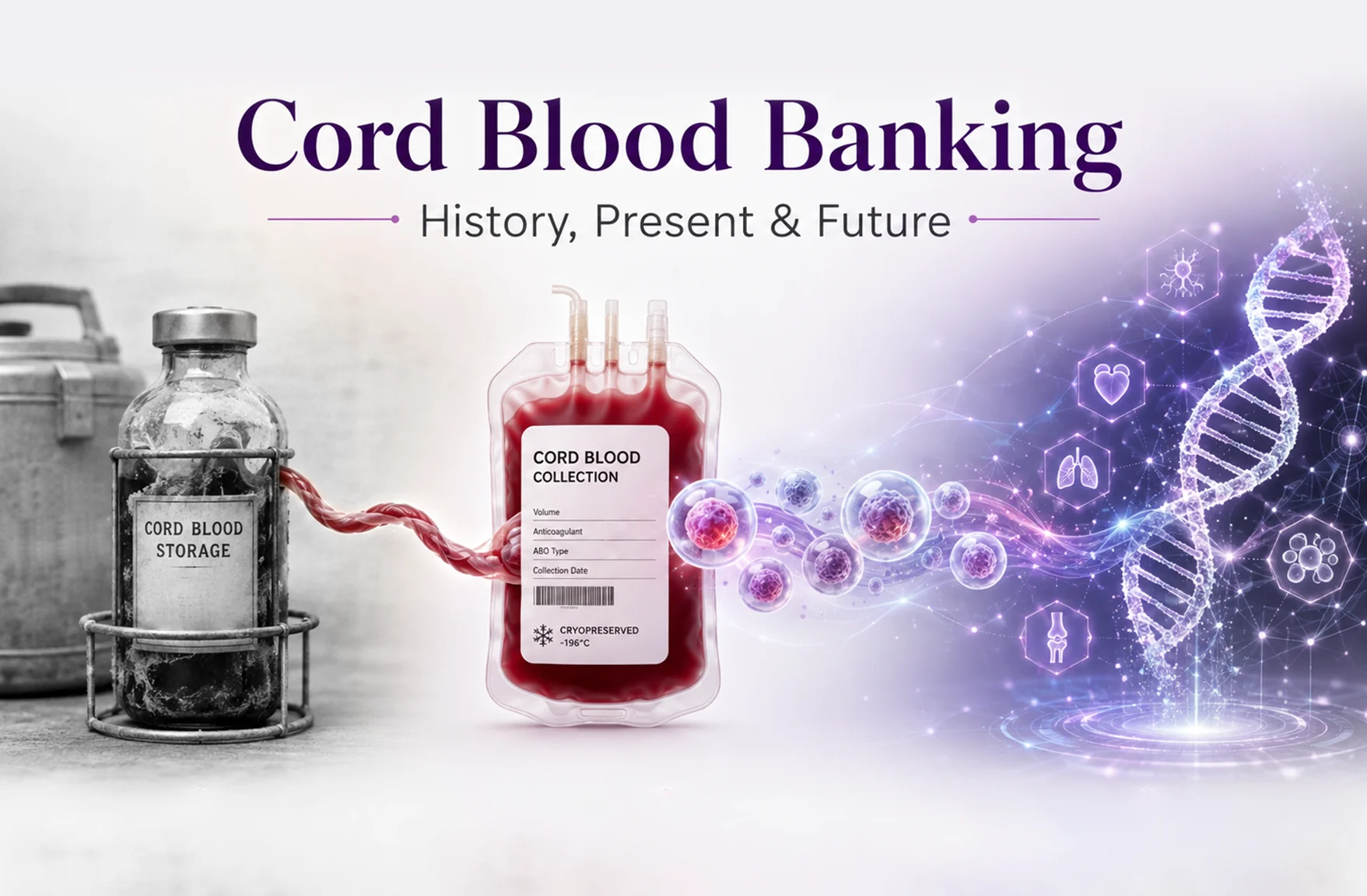
The good news is that, contrary to your belief, cord blood stem cell banking isn’t a new or experimental concept. It is a field backed by decades of scientific research, clinical experience, and continuous innovation. From the first successful transplant in 1988 to today’s advanced preservation techniques and ongoing regenerative medicine research, cord blood banking has come a long way.
In this guide, we’ll take you through its journey—from its history and current medical applications to emerging innovations like hybrid stem cell banking and the exciting future of stem cell research.
Key Takeaways
- Umbilical cord blood contains valuable hematopoietic stem cells, which help produce healthy blood and immune cells.
- The first successful cord blood stem cell transplant was performed in 1988, marking a milestone in modern medicine.
- Presently, parents can choose between public, private, and hybrid stem cell banking models.
- Cord blood stem cells are currently used in established treatments for several blood, immune, and metabolic disorders.
- Researchers continue to study stem cells for potential applications in regenerative medicine and personalized healthcare.
- Cord blood can only be collected once—immediately after birth—making it a unique opportunity for expecting parents.
Featured Snippet (FAQ)
What is cord blood stem cell banking ?
Cord blood stem cell banking is the process of collecting, testing, processing, and preserving stem cells found in a newborn’s umbilical cord blood immediately after birth. These stem cells are stored using cryopreservation (liquid nitrogen tanks at -196°C) and can be used for medical requirements.
Understanding the Science Behind Cord Blood Stem Cells ?
Before exploring the history of cord blood banking, it’s important to understand what makes these cells so valuable.
What are stem cells ?
Stem cells are often called the body’s master cells because they have two remarkable abilities:
- They can make copies of themselves.
- They can develop into specialized cells that perform different functions within the body.
These unique properties of regeneration have made stem cells a key component in modern medicine.
What are hematopoietic stem cells ?
Cord blood contains a special type of stem cell known as hematopoietic stem cells (HSCs).
In simple terms, these are blood-forming stem cells that help produce:
- Red blood cells
- White blood cells
- Platelets
- Cells that support the immune system
Because of this ability, hematopoietic stem cells have become an established option in the treatment of several blood and immune-related disorders.
What is cryopreservation ?
After collection, the stem cells are processed and stored using cryopreservation.
Cryopreservation is a specialized laboratory technique in which stem cells are frozen in liquid nitrogen tanks at ultra-low temperatures (-196°C) to help preserve their viability for potential future use.
Featured Snippet (FAQ)
When is cord blood collected ?
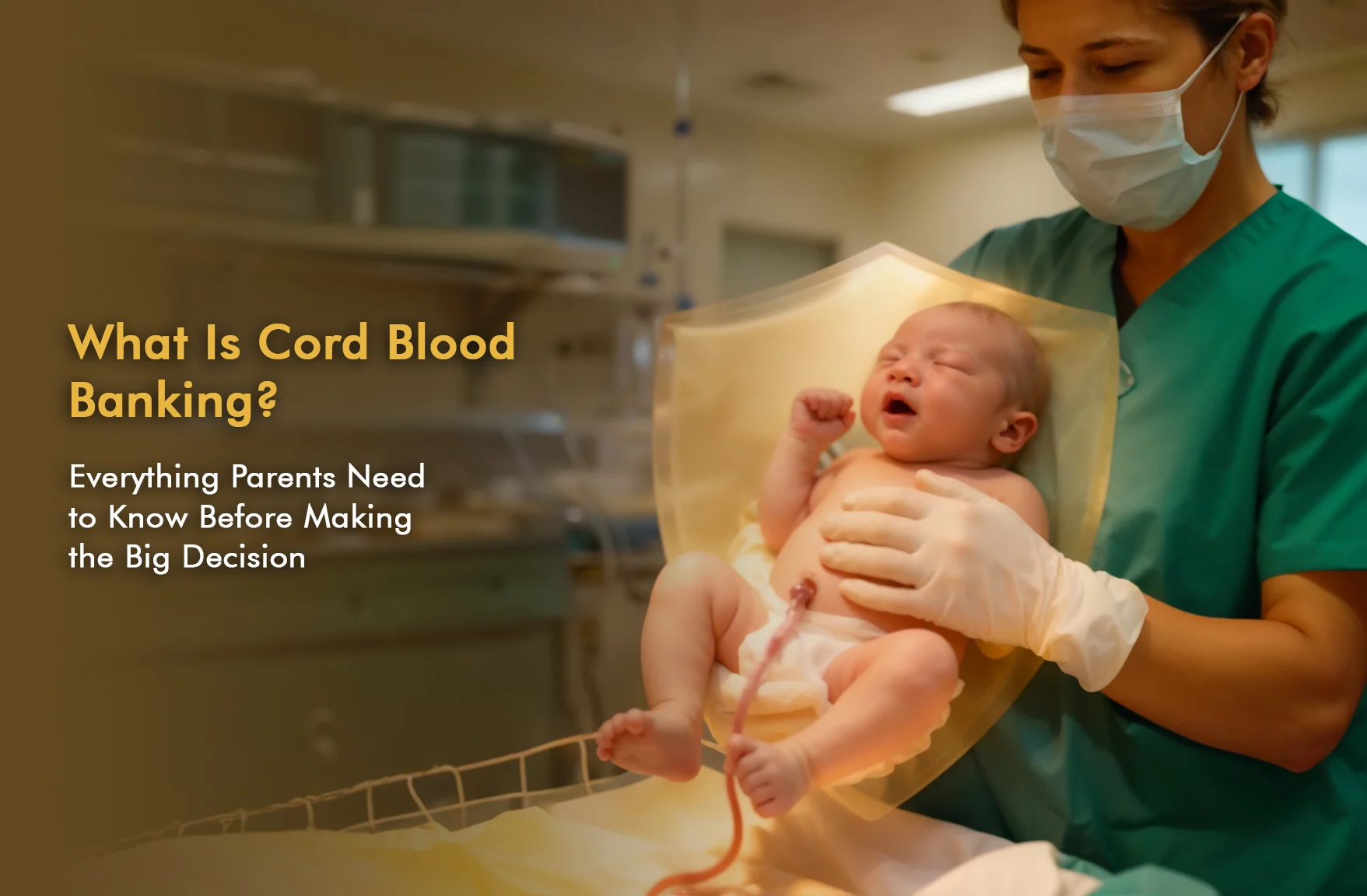
Cord blood is collected immediately after the baby is born and after the umbilical cord has been clamped and cut. The procedure is painless, does not interfere with childbirth, and poses no risk to the mother or baby.
The History of Cord Blood Stem Cell Banking
Today’s cord blood banking industry is the result of decades of scientific discovery.
Interestingly, the umbilical cord wasn’t always considered valuable.
That perception changed as researchers began studying stem cells more closely.
Early Scientific Discoveries
During the 1970s and early 1980s, scientists discovered that blood remaining inside the umbilical cord contained a rich source of hematopoietic stem cells.
Researchers quickly recognized several advantages of cord blood:
- It could be collected safely after birth.
- No surgical procedure was required.
- Collection was painless.
The cells could be preserved for future medical use.
Featured Snippet (FAQ)
When was the first cord blood stem cell transplant performed ?
The world’s first successful cord blood stem cell transplant was performed in 1988 on a child with Fanconi anemia, a rare inherited blood disorder. The procedure demonstrated that stem cells collected from umbilical cord blood could successfully restore healthy blood formation and marked the beginning of modern cord blood banking.
A Medical Breakthrough That Changed Everything
In 1988, a team led by Dr. Eliane Gluckman performed the first successful cord blood stem cell transplant on a child diagnosed with Fanconi anemia, a rare genetic disorder affecting the bone marrow.
The success of this procedure proved that cord blood stem cells could successfully rebuild a patient’s blood and immune system under appropriate clinical circumstances.
By 1992, the first public cord blood bank was established in New York to store donated samples for the general public, followed closely in 1993 by the first unrelated donor cord blood transplant, proving that these cells could safely cross genetic lines to save strangers.
The Growth of Cord Blood Banking Worldwide
Following the success of the first transplant, the field expanded rapidly.
Major developments included:
- Establishment of public and private cord blood banks
- Standardized collection procedures
- Improved laboratory processing techniques
- Advances in cryopreservation technology
- International donor registries
Increased clinical research into stem cell therapies
Where Cord Blood Stem Cell Banking Stands Today
Over the last three decades, cord blood stem cell banking has evolved from an emerging medical concept into a structured healthcare service supported by advanced laboratory technology, standardized processing protocols, and growing clinical evidence.
Today, expecting parents have access to safe collection methods, accredited processing laboratories, and multiple banking options tailored to different family needs.

Featured Snippet (FAQ)
What diseases are cord blood stem cells currently used to treat ?
Cord blood stem cells are currently used in established medical treatments for certain blood cancers (such as leukemia), inherited blood disorders (such as thalassemia and sickle cell disease), immune system disorders, and selected metabolic disorders.
The suitability of cord blood transplantation depends on the patient’s condition and a physician’s clinical evaluation.
Current Medical Applications of Cord Blood Stem Cells
Cord blood stem cells have moved beyond research laboratories and are now part of established clinical practice for several conditions.
Some of the major disease categories include:
Blood Cancers
Cord blood stem cells have been used as part of treatment protocols for certain blood cancers, including:
- Leukemia
- Lymphoma
These treatments are performed under the guidance of specialist transplant physicians and are based on individual patient suitability.
Blood Disorders
Cord blood stem cells have also been used in treating inherited blood disorders such as:
- Thalassemia
- Sickle Cell Disease
- Fanconi Anemia
These disorders affect the body’s ability to produce healthy blood cells, making stem cell transplantation an important treatment option for selected patients.
Immune System Disorders
Some immune deficiencies can affect the body’s ability to fight infections.
In specific clinical situations, cord blood stem cell transplantation may help restore healthy immune cell production.
Metabolic Disorders
Cord blood stem cells have also been used in the treatment of selected metabolic disorders—rare genetic conditions that affect the body’s ability to process certain nutrients or enzymes.
The Evolution of Stem Cell Banking Models
Today, three primary banking models are available.
Public Stem Cell Banking
Public banking allows parents to donate their baby’s cord blood to a public registry.
If the stored sample matches a patient in need, it may be used for stem cell transplantation.
Key Features
- Donated for public use
- May benefit unrelated patients
- Listed in donor registries
- Cannot usually be reserved exclusively for the donating family
Public banks have significantly increased the availability of stem cell donors worldwide.
Private Stem Cell Banking
Private banking allows parents to preserve their baby’s stem cells exclusively for their own family’s potential future medical needs.
Key Features
- Stored exclusively for the family
- Immediate accessibility if medically appropriate
- Long-term cryogenic preservation
- Not available for unrelated public use
Many families choose private banking because it provides direct access to their preserved stem cells should they ever be needed.
Featured Snippet (FAQ)
What is Hybrid Stem Cell Banking ?
Hybrid Stem Cell Banking is an advanced preservation model that combines features of both private and public stem cell banking.
It allows families to preserve their baby’s stem cells for potential personal use while incorporating access to public banking, depending on the provider’s programme and applicable regulations.
Hybrid Stem Cell Banking: A Newer Approach
Rather than viewing public and private banking as two separate choices, hybrid stem cell banking combines important aspects of both models.
Depending on the programme offered, Hybrid Stem Cell Banking may provide:
- Preservation of the baby’s stem cells for the family’s potential future use.
- Additional benefits associated with public banking frameworks, where applicable.
- Greater flexibility for future treatment scenarios that may require more than one stem cell unit, subject to clinical need and physician guidance.
The Future of Cord Blood Stem Cell Banking: Where Is the Science Headed ?
Researchers worldwide are also exploring how these cells could contribute to the next generation of medical therapies.
The future of cord blood banking lies not only in preserving stem cells but also in understanding their full therapeutic potential.

Featured Snippet (FAQ)
What is regenerative medicine ?
Regenerative medicine is a branch of healthcare focused on repairing, replacing, or regenerating damaged cells, tissues, or organs. Scientists are studying how stem cells may support future treatments by helping the body restore normal function. While many applications are promising, several remain under clinical investigation.
A New Era: Regenerative Medicine
Traditional medicine often focuses on treating symptoms or slowing disease progression.
Regenerative medicine takes a different approach.
Its goal is to help the body repair or replace damaged cells or tissues using its own natural healing mechanisms—or by using biological materials such as stem cells.
Because stem cells can develop into different types of specialised cells, researchers believe they may play an important role in future therapies.
Although many applications are still under investigation, regenerative medicine has become one of the fastest-growing fields in modern healthcare.
Where Are Researchers Focusing Today ?
Globally, scientists are conducting clinical research to better understand how stem cells may contribute to treating diseases that currently have limited treatment options.
Some of the active areas of research include :
Neurological Disorders
Examples being explored include:
- Cerebral palsy
- Stroke recovery
- Spinal cord injuries
- Parkinson’s disease
Autoimmune Diseases
Researchers are investigating whether stem cells could help regulate immune responses in conditions such as:
- Systemic Lupus Erythematosus (SLE)
- Multiple Sclerosis
Note: Most of these applications remain experimental and require further clinical validation.
Featured Snippet (FAQ)
Can cord blood stem cells be used for future treatments ?
Researchers are actively studying new applications for cord blood stem cells in regenerative medicine, including neurological disorders, autoimmune diseases, and more. While some treatments are already established, many future applications are still being evaluated through clinical trials and are not yet considered standard medical practice.
Separating Facts from Future Possibilities
While scientific progress is encouraging, it is equally important to understand the difference between:
Established Medical Uses
These are treatments supported by clinical evidence and currently practiced in specialised transplant centres.
Examples include:
- Leukemia
- Lymphoma
- Thalassemia
- Sickle cell disease
- Certain immune deficiencies
- Selected metabolic disorders
Emerging Research
Scientists are investigating potential applications for:
- Neurological disorders
- Type 1 diabetes
- Autism spectrum disorder
- Regenerative therapies
These areas are being studied through clinical trials and should not be interpreted as routine or approved treatments.
Why Awareness During Pregnancy Matters
One of the most unique aspects of cord blood stem cell banking is that the opportunity exists only once.
Unlike many healthcare decisions that can be revisited later, cord blood can only be collected immediately after birth.
If it is not collected at that time, the opportunity is permanently lost.
This is why healthcare professionals encourage parents to begin learning about stem cell banking during the second or third trimester, allowing enough time to:
- Understand the science.
- Explore available banking options.
- Discuss the topic with their obstetrician.
- Ask questions about collection and storage.
- Choose the banking model that best aligns with their family’s preferences and medical considerations.
By planning, parents can make informed decisions without feeling rushed as the due date approaches.
Our team can guide you throughout this important decision with clear guidance, transparent information, and answers to your questions.
📞 Call: 1800 120 0086




Leave A Comment