
If you are here reading this blog, then let’s assume you are an expecting parent or know someone who is. So, let’s answer an extremely important question first. How many times have you heard of “cord blood banking” to date?
Between nursery preparation, health checkups, and endless pregnancy checklists, the chances are extremely high that you must have had your introduction to umbilical cord blood stem cell banking.
But very few will be able to give you a clear picture. But as expecting parents trying to safeguard their baby’s future, you need clear answers to all the questions to decide if cord blood banking is worth it.
So, here we are, stripping away misinformation and presenting clear facts, data, and clinical details about stem cell banking, answered in straightforward, transparent terms.
Q1: What are stem cell banking and cord blood banking? Are they both different ?
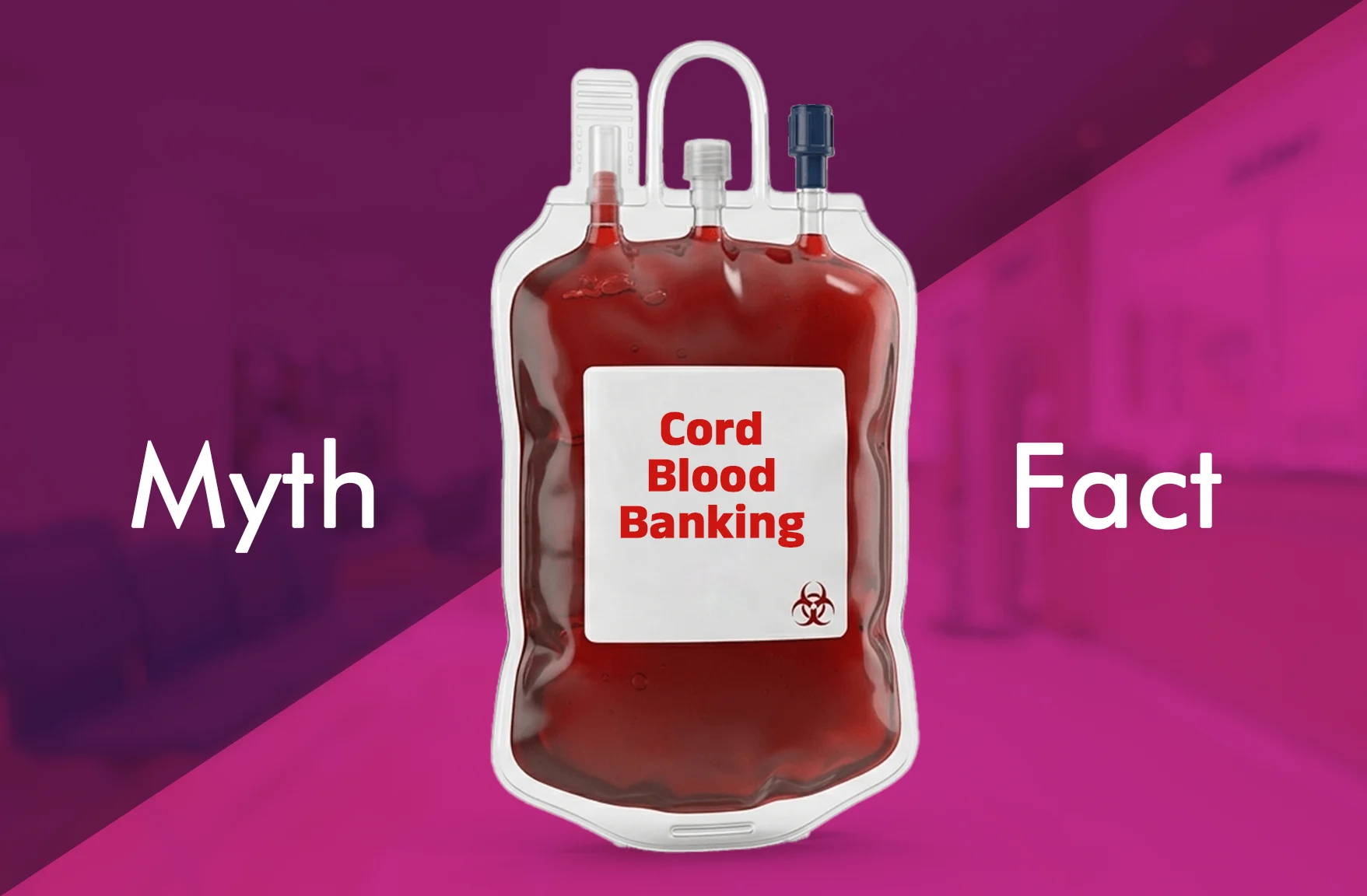
Stem cell banking, cord blood banking, and umbilical cord blood banking are terms used to describe the process of preserving your newborn’s blood from the umbilical cord. The cord blood contains the youngest, most adaptable cells your family will ever have access to.
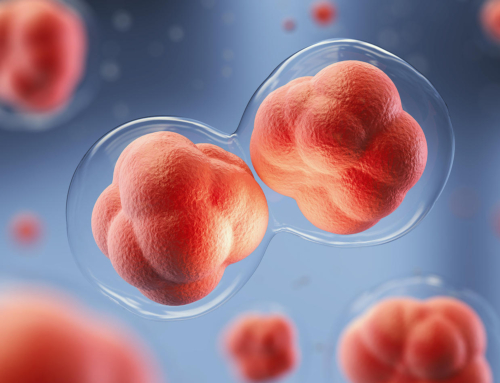
These cells are called Hematopoietic Progenitor Cells (HPCs). Think of them as your body’s “master cells”—they are blank slates capable of rebuilding a completely broken immune system or replacing diseased blood cells. These master cells are called stem cells and can differentiate into various cell types.
Storing them acts as a biological backup system for your child’s health.
Q2: How are stem cells collected? Does it hurt my baby or me ?
No, it hurts nobody; neither your baby nor the mother. The process is completely non-invasive and painless.
How stem cells are collected is simple: right after your baby is delivered, the doctor clamps and cuts the umbilical cord exactly as they normally would. Before the placenta is delivered, a sterile needle is inserted into the isolated cord to drain the leftover blood into a specialized collection bag.
Your baby is already in your arms; the collection takes less than 5-10 minutes and harvests cord blood that would otherwise be discarded. But this process can only be done at the time of birth, making it a once-in-a-lifetime opportunity.
Q3: Why shouldn’t I just let the umbilical cord be thrown away ?
By throwing the umbilical cord away during delivery, you discard the biological resource of valuable stem cells which cannot be preserved again.
Q4: What diseases can stem cells treat presently ?
Today, cord blood stem cells are a standard, health-authority-approved treatment for over 80+ life-threatening conditions. This is not experimental medicine; it is an active clinical reality.
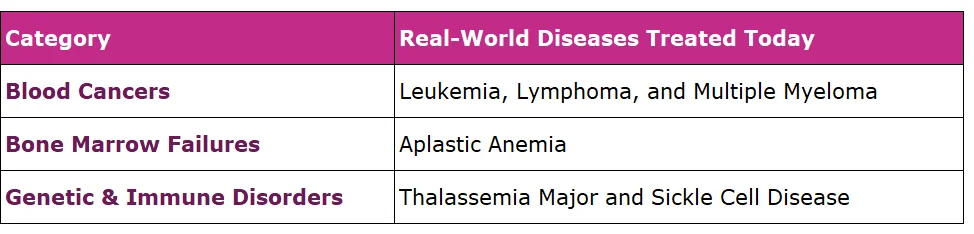
Presently, umbilical cord blood stem cells are used to treat numerous immune, blood, metabolic conditions & cancers.
Here are a few conditions that can be treated using these cells (and many more) :
Q5: Can these cells be used to treat future diseases or adult conditions ?
Yes, there is a high chance that stem cells will be used to treat several future diseases or adult conditions.
Numerous active clinical trials are underway for the treatment of conditions like Acute Ischemic Stroke and Cerebral Palsy, demonstrating that these cells will protect your child well into adulthood.
Ongoing stem cell clinic research is primarily focused on regenerative medicine, neurological disorders, cancer immunotherapy & autoimmune diseases, precision medicine & drug development.

Q6: What are the main cord blood banking pros and cons ?
Cord blood banking is a biological insurance that provides protection to your baby and entire family.
Although many, a primary benefit of having umbilical cord blood stem cell banking is:
- Pro: You secure a 100% perfect genetic match for your child, avoiding the risk of rejection. You gain immediate access to a therapy sample without waiting months on a donor registry, and you tap into a partial match safety net for biological siblings and the entire family.
Though not many, here is a primary con of cord blood banking.
- Con: It requires a financial commitment. There is an upfront processing fee and an ongoing storage cost for a medical asset you hope your child never has to use. However, this cost is negligible compared to the financial, mental, and emotional burden of finding a stem cell match if the need for a stem cell transplant arises in the future.
Q7: What is the difference between a private and a public stem cell bank? And, which one is better ?
A major difference lies in their storage function.
A public bank functions like a public blood drive. You donate the cells for free; you lose ownership, and they can be given to any matching patient worldwide.
A private bank stores the cells exclusively for your baby and the family, but if you need an additional unit, you must buy it, adding a financial burden to the process.
The best solution is to find a combination of both like StemCyte’s unique hybrid banking model. You pay to preserve your baby’s cells privately, but you also gain complimentary, priority access to our global public inventory of qualified units if your family ever needs an allogeneic transplant.
In a hybrid model of stem cell banking, your baby’s stem cells are stored solely for your family’s use, along with providing access to the public inventory of the bank. It is the best of both worlds.
Q8: What are the actual stem cell banking benefits for the rest of the family ?
While your baby gets a 100% perfect match, the genetic benefits ripple outward.
Biological siblings are a partial match, making it an excellent shield if a brother or sister faces an illness.
Parents and grandparents also stand a strong chance of a partial match, which is critical given our ongoing clinical trials into adult stroke and regenerative recovery.
Presently, stem cell banking provides protection to your baby and the entire family.
Q9: How are the stem cells stored, and how long can these stem cells stay frozen ?
Stem cells can technically be stored for many decades.
The cells are stored in computerized liquid nitrogen tanks (-196°C at temperatures below -150°C. At this extreme temperature, all biological time stops.
Published clinical data prove that cord blood units frozen for 25 to 30 years show the cell viability post thawing and engraftment rates after transplant.

Q10: What makes a company the best stem cell banking company in India ?
Look exclusively at transplant experience. Storing cells is easy; successfully thawing and releasing them to save a life in a hospital is what matters.
StemCyte is the global clinical leader, with over 2,300 successful transplants delivered across 350+ international transplant centers.
We are also the only cord blood bank in India carrying FACT (Foundation for the Accreditation of Cellular Therapy) accreditation, which is the gold standard that global doctors look for.
Our Plasma Depletion Processing technology of cord blood allows us to preserve up to 75ml of cord blood which is almost 3 times higher compare to other banks.
Q11: What is the average cord blood banking cost in India, and are there EMIs ?
When looking at StemCyte India pricing, we break it down to be accessible to young families.
For example, our StemCyte Pro 21-year storage plan starts at ₹55,000 (plus GST), and includes a ₹20,00,000 Safeguard Program to help cover transplant costs, Free Unit From Public Bank, Free Shipment and many other features.
To fit modern household budgets, we provide interest-free 0-cost EMI plans that break the investment down to just a few thousand rupees a month.
Additionally, we are also the only stem cell banking company to offer stem cell banking protection to families from our Public Bank starting at just ₹9,990 (plus GST).
Conclusion :
Cord blood banking is an absolute, non-negotiable one-time window.
Once the umbilical cord is discarded after delivery, a magical genetic resource is lost forever. By looking past the marketing fluff and focusing on real transplant data, global accreditations, and cutting-edge clinical trials, you can transform medical waste into a bulletproof biological inheritance.
It is one of the best gifts that you, as an expecting parent, can give your newborn and the entire family – complete protection from 80+ health conditions.
But it is crucial to decide before time runs out.





Leave A Comment