

Pregnancy is often described as a miracle, and it truly is. But it can also feel overwhelming. One day you are full of energy, the next you’re struggling with nausea, backache, or swollen feet. These changes can make you wonder, “Is this normal? Or should I be worried?”
Pregnancy is not an illness—it’s a natural stage of life. With the right awareness, you can live fully, work, exercise, laugh, and enjoy these months with comfort.
Truth is your body is doing extraordinary work. It is creating, protecting, and nourishing a new life. Every stretch mark, every heartbeat, every change has meaning. Be present to these changes, listen to your body, and take the right actions so that you stay healthy, comfortable, and happy—while also knowing the warning signs when expert help is needed.
Why Awareness of Body Changes Matters?
Pregnancy is not about silently enduring discomfort or ignoring your body. It’s about listening closely—to your hunger, your tiredness, your emotions, your backache your instincts.
- When you recognize what’s normal, you feel calmer.
- When you know what’s not normal, you can take timely action.
- When you care for yourself holistically, you give your baby the best possible start.
Being present to your body is an act of love—not just for yourself, but for your baby.
Common Body Changes
- First Trimester (0–12 weeks)
- Nausea & Vomiting: Morning sickness happens because hormones are adjusting.
Small, frequent meals, ginger, or lemon water can help.
- Fatigue & Sleepiness: Growing a baby takes energy.
Rest whenever your body asks for it.
- Breast Changes: Tenderness or enlargement means your body is preparing for breastfeeding.
- Second Trimester (13–28 weeks)
- Visible Belly Bump: Your uterus expands, and your belly begins to show.
- Skin Changes: Stretch marks, pigmentation, or a dark line (linea nigra) on the belly are common.
- Increased Energy: Many women feel more active during this phase—use it to walk, stretch, and connect with your baby.
- Third Trimester (29–40 weeks)
- Backache & Leg Cramps: Your body is carrying extra weight.
Gentle exercises, stretching, or warm compresses can help.
- Mild Swelling in Feet or Ankles: Due to water retention.
Elevating legs and hydration bring relief.
- Breathlessness: The growing uterus pushes against the diaphragm.
Slow, mindful breathing helps.
These Changes Are Signs That Your Body Is Working Perfectly to Grow Your Baby.

Staying Comfortable & Healthy Despite the Changes
It is not possible to avoid changes but to live with ease and comfort through them is important. Here’s how:
- Balanced Eating: Whole grains, fresh fruits, vegetables, pulses, nuts, and dairy give strength. Iron-rich foods (spinach, jaggery, beans) and calcium-rich foods (milk, sesame, ragi) support you and your baby.
- Hydration: Drinking enough water eases swelling, constipation, and fatigue.
- Movement: Walking, prenatal yoga, or gentle stretching reduces back pain and improves circulation.
- Rest: Listen to your body. Sleep on your left side for better blood flow. Nap without guilt.
- Emotional Care: Meditation, deep breathing, or even talking to your baby keeps you centred. Writing a pregnancy journal helps too.
- Partner & Family Support: Share your feelings. Don’t hesitate to ask for help—pregnancy is teamwork.
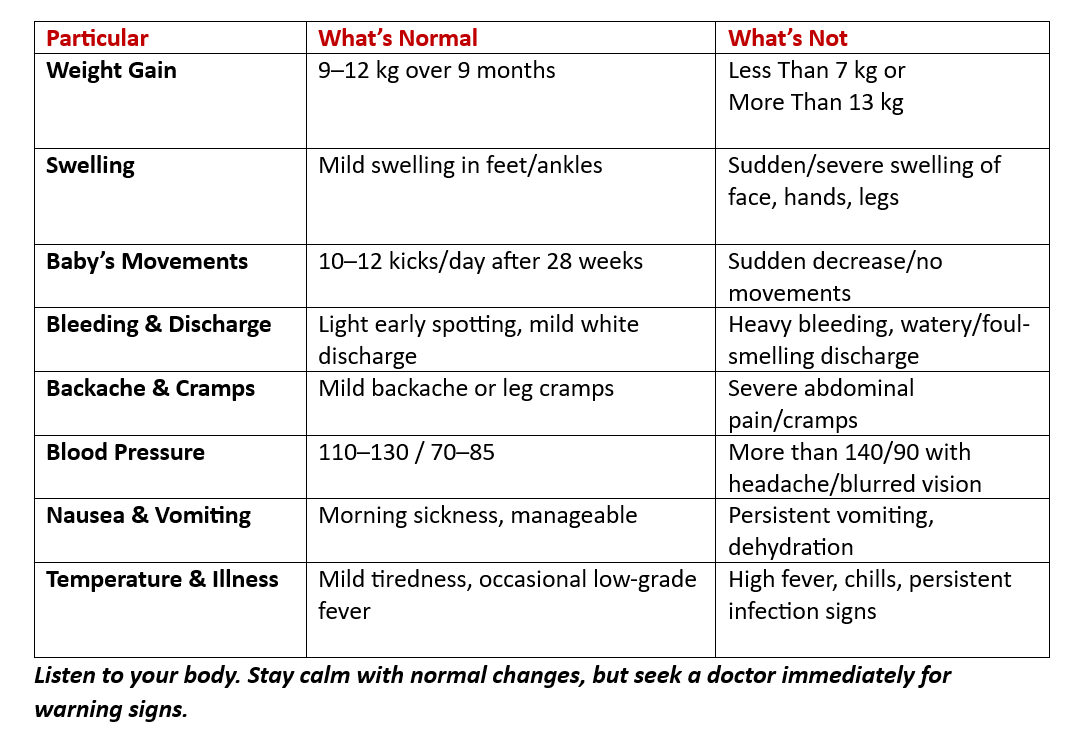
What’s Normal & What’s Not ?
Deeper Connection – Mother & Baby
Your baby feels your emotions. When you are calm, happy, and well-rested, your baby benefits. When you talk or sing, your baby listens.
- Place your hand on your belly and breathe slowly. Imagine sending love to your baby.
- Read aloud, play music, or simply share your day with your little one.
- Visualize yourself holding a healthy baby—it calms your mind and creates positivity.
By staying connected to your body, you deepen your connection with your baby.
Signs You Should NEVER Ignore
Awareness is also about spotting danger early. These are the red flags that mean you must seek medical help immediately:
- Heavy bleeding or sudden gush of fluid
- Severe abdominal pain or intense cramps
- Severe headache, blurred vision, or dizziness
- Sudden swelling of face, hands, or legs
- High fever or chills
- Persistent vomiting leading to dehydration
- Baby’s movements reducing suddenly (especially after 28 weeks)
If your intuitive feeling tells you “Something feels wrong,” trust it and call your doctor. Acting early can save lives.
Living a Normal Life with Ease & Joy
- Continue routines you love, with small adjustments.
- Stay social and active but avoid overexertion.
- Celebrate milestones—the first heartbeat, the first kick, the growing belly.
- Practice gratitude—each day brings you closer to meeting your baby.
Remember, your body is not just changing—it is preparing & becoming the safest home your baby will ever know.

A Holistic Mantras for Every Pregnant Woman
- Listen to your body.
- Care for your body with love.
- Stay aware of warning signs.
- Stay connected to your baby.
- Trust yourself—you are stronger than you think.
A Heartfelt Note to Mom-To-Be,
Your body is wiser than you realize. It knows how to create, protect, and nurture life. Yes, pregnancy brings changes—some easy, some uncomfortable—but every change has purpose.
When you eat well, rest enough, move gently, and stay emotionally balanced, you don’t just survive pregnancy—you thrive. You live these nine months with grace, comfort, and joy.
And when you notice something unusual, don’t ignore it. Seeking help early is not weakness—it’s strength. It’s love in action for your baby and yourself.
So, place your hands on your belly and tell your baby:
We are safe & strong – My body is guiding me – We are on this journey together.
Disclaimer :
The information in this blog is for educational and awareness purposes only. It is not a substitute for professional medical advice, diagnosis, or treatment. Every pregnancy is unique, your body, health needs, and experiences may differ. Always consult your gynaecologist or healthcare provider regarding any concerns, unusual symptoms, or before making changes to your diet, exercise, or lifestyle during pregnancy. Listen to your body, but let your doctor guide your care.










Leave A Comment