
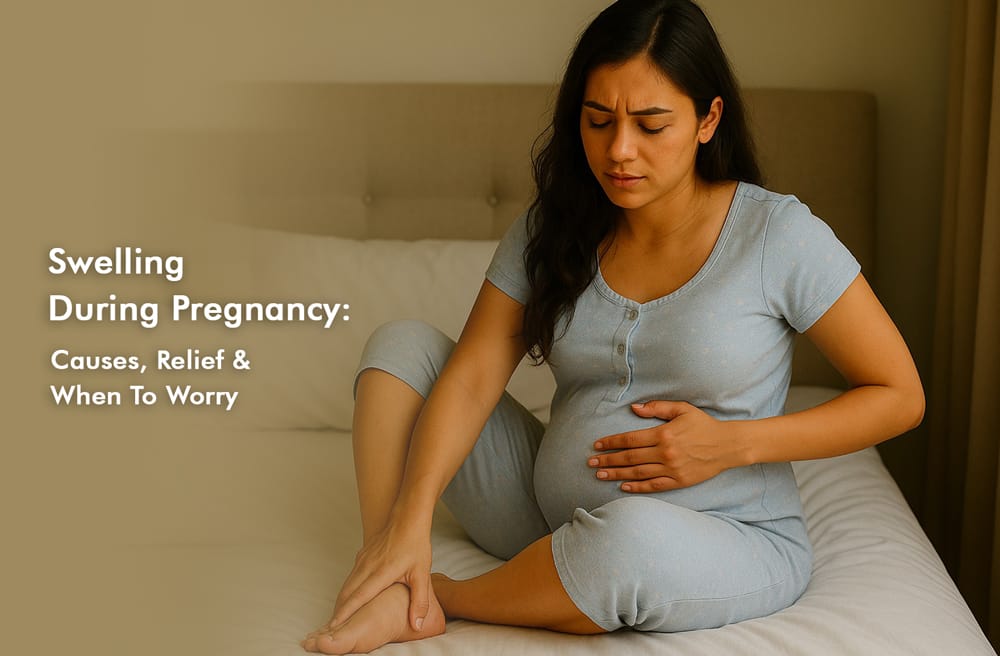
Leg swelling in pregnancy and swelling in your ankles, feet and fingers can be a normal part of your pregnancy. Swelling while pregnant keeps more fluid in the body, plus growing uterus puts pressure on your veins, which can slow the return of blood to your heart. Changes in hormones also play a role. Your doctor can diagnose swelling by examining your swollen limb. Foot and ankle swelling while pregnant is common.
Factors That Can Contribute To Swollen Feet Include :
- Hot weather
- Dietary imbalances
- Caffeine intake
- Not drinking enough water
- Being on your feet for long periods of time
Swelling goes away within a few weeks after the baby is born. In the meantime, it might help to :
Stay off your feet :
Don’t stand for a long time. When you can, lie down with your legs raised. Or sit with your feet up. When you’re seated, move your feet around in a circular motion at the ankles. Gently flex your feet to stretch your calf muscles.
Sleep on your left side :
This takes pressure off the large vein that returns blood from the lower half of your body to your heart. Raising your legs slightly with pillows while you sleep also may help.
Stand or walk in a pool :
This seems to help compress tissues in the legs. That may give you some relief from swelling during pregnancy.
Wear clothes without tight bands :
Tight bands on clothes, such as at the ankles may make it harder for your blood to flow easily.
Eat potassium-rich foods :
Bananas are high in potassium, which can help relieve swelling.
Wear supportive foot wear :
Unsupportive and uncomfortable shoes can cause leg and feet swelling during pregnancy. You’ll feel more comfortable in shoes that fit well & support your additional body weight.
Walk :
Going for even a 5 or 10 minute walk a couple of times per day can help improve your circulation, which helps reduce swelling.
Get Massage :
Massage helps circulate the fluids that tend to accumulate in your feet, which will in turn reduce swelling.
You do not need to cut back on how much fluid you drink. Recommendation for fluids intake during pregnancy is about 2.3 Liters / day.

Swelling can also be life-threatening
Sudden face swelling during pregnancy along with hands or feet can be a sign of preeclampsia, a life-threatening complication of pregnancy.
It is important for you to know when your swelling can be dangerous for you and your baby and what you should do.
What causes swelling during pregnancy?
You may experience swelling while pregnant for various reasons :
- You have more blood than usual in your body to help your baby grow.
- As your baby grows, your uterus gets bigger and presses on veins and slightly blocks the veins that return blood from your legs to your heart.
- Your hormones make the walls of your veins softer, making it harder for them to work properly.
Because of these your blood tends to collect in your legs. There, a small amount of blood leaks through tiny blood vessels into the tissues and causes the swelling. This type of swelling is a regular part of pregnancy.
Some Complications During Pregnancy Can Also Cause Swelling :
- Varicose veins in legs
- Carpel tunnel syndrome
- Pre-eclampsia
Swelling In Your vulva :
If you develop varicose veins in your vulva (external genitals), you may become swollen and sore in that area.
Complications Of Swelling While Pregnant?
Feet swelling during pregnancy or puffy feet indicates normal processes of your pregnancy and does not cause any complications.
If you have leg swelling in pregnancy, it is because of varicose veins, you can develop some rare complications including :
- Venous thrombus — a small clot including deep vein thrombosis or pulmonary embolism
- Thrombophlebitis — inflammation of your vein
- Bleeding of your varicose vein
Swelling because of pre-eclampsia or VTE can cause serious complications for you and your baby.
It is very important to see your doctor if you have signs of dangerous swelling during pregnancy.
In case of swelling when should you see your doctor?
You do not need to see a doctor if you have gradual and mild swelling in your feet, as this is normal during pregnancy. You should immediately contact your doctor, if you develop sudden swelling of your face, hands or feet or any of these symptoms:
- Swelling that suddenly get worse
- A very severe or dull headache that does not go away.
- Changes to your vision, blurry vision or flashing lights or dots
- Severe pain below ribs
- Feeling sick or vomiting.
- High BP
- Heart burn that does not go away with antacids

These can be symptoms of preeclampsia, a very dangerous complication for you and your baby :
If one arm or leg is more swollen than the other and you also feel pain, redness or your limb is warm, contact your doctor, midwife or maternity hospital straightaway.
You may need urgent care in the hospital. These symptoms can be a sign you have a blood clot in the vein (venous thromboembolism — VTE).
If you have any of these symptoms during pregnancy, see your doctor as soon as possible.
Diagnosis of Swelling During Pregnancy :
During your antenatal check-ups the doctor can diagnose swelling by asking you about your medical history, your sharing of symptoms & examining you.
To check for swelling, the doctor may need to gently be press on your skin. To assess the swelling in the vulva, by doing a vaginal examination.
If your doctor thinks your swelling is caused by preeclampsia or a blood clot, they will do specific tests to diagnose those conditions.
How is Swelling During Pregnancy Treated?
Here are some home remedies for feet swelling during pregnancy:
- When you rest, elevate (lift) your legs.
- Avoid standing still for long periods of time.
- Wear comfortable and loose clothes and shoes.
- Wear compression stockings during the day, and take them off at night.
- Sleep on your left side, which will help blood return to the heart.
- Exercise regularly, walking or swimming — this helps keep your circulation going.
If you have swelling in your vulva, your doctor or midwife may suggest you wear a sanitary pad firmly against the swollen area for support. There is some research about how to reduce leg swelling during pregnancy.
Can Swelling During Pregnancy be Prevented?
Here are some tips to reduce swelling in your ankles and feet:
- Avoid standing for long periods of time.
- Rest often with your legs elevated.
- Wear comfortable and loose shoes.
- Wear compression stockings.
- Cook with less salt and eat less salty foods.
Talk with your doctor about foot and leg swelling, & other symptoms, The more we know about your current condition, the more we can help reduce your risk of future complications.
Swelling can get worse near the due date, near the end of the day, and in hot weather.
Seek Medical Advice If :
- Swelling lasts for more than a day
- Swelling appears suddenly
- Swelling in one leg is more than the other
While we can’t fully prevent foot and leg swelling, we recommend ways to reduce your risk:
- Regular Exercises
- Good sleep
- Healthy diet rich in vegetables & fruits.
Discomfort during pregnancy is to be expected, but your goal is to partner with your doctor to minimize it – as well as the risk of more serious conditions.
The Takeaway :
Swollen feet and puffy legs during pregnancy are a very common side effect while pregnant. Swelling is caused by increased fluid volume in your body, as well as decreased circulation.
If you experience sudden or severe swelling, it’s important to call your doctor, as this may be a sign of something more serious. But a little swelling is definitely expected.
You can help prevent foot swelling by getting regular gentle exercise, drinking plenty of water, resting, and eating a balanced diet.
Disclaimer :
The content provided in this blog is for educational and informational purposes only. It is not intended as a substitute for professional medical advice, diagnosis, or treatment. Always consult your Doctor, Gynecologist, or Healthcare Provider especially when dealing with discomfort or underlying medical conditions.





Leave A Comment