
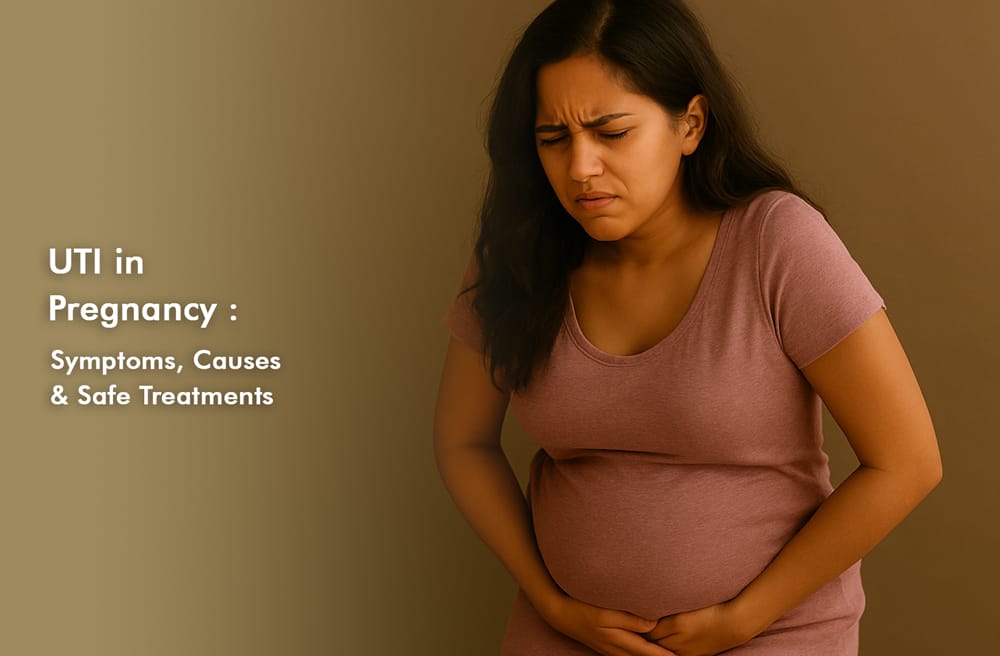
A Urinary Tract Infection (UTI) in pregnancy is an infection in your urinary system that occurs during pregnancy. Your urinary system includes Urethra, Bladder, Ureters & Kidneys system which works to filter waste and extra water from your body as urine without contamination. As long as it’s inside you, there’s usually no bacteria in it. But outside bacteria move into your urinary system.
Urinary tract infections (UTIs) are the most common bacterial infection in pregnancy, and if you’re pregnant you have a 1 in 10 chance of having one.
Pregnancy increases your risk of developing urinary tract infections. Especially between 6 to 24 weeks when your urinary tract changes as your uterus grows. The increased weight and pressure of your uterus on your bladder can block urine from flowing, making it an ideal environment for bacteria.
Pregnancy also suppresses your immune system, which is the body’s natural defence against illness. This can increase your risk of infection, including UTIs. Symptoms include painful urination, cloudy urine and needing to urinate often. Your doctor can prescribe an antibiotic to safely treat a UTI during pregnancy.
UTI presents from asymptomatic bacteriuria to symptomatic acute cystitis, to the most serious, pyelonephritis.
There are a few different ways urinary tract infections can affect your urinary system:
Asymptomatic Bacteriuria (ASB) is mostly caused by bacteria that were in your body before you became pregnant. Because it has no symptoms, doctors usually screen for ASB through a urine test at the first prenatal appointment.
- Urethritis involves urethra, the tube that carries urine out of the body.
- Cystitis involves your bladder, which holds urine.
- Pyelonephritis affects your kidneys.
Symptoms And Causes
What are UTI symptoms during pregnancy?
The Most Common signs and symptoms of a UTI while pregnant include:
- Pain while passing urine.
- Blood in Urine.
- Abnormal cloudy urine with a strong smell.
- Incontinence – Urine leakage.
- Increased & urgent need to pass urine.
- Pain during intercourse.
- Fever & chills.
- Vomiting.
- Pain in your sides of abdomen.
Be sure to report any of these signs and symptoms to your doctor.
Causes Of UTI Infection During Pregnancy?
The most common cause of UTI during pregnancy: Escherichia coli or E. coli bacteria. It causes 80% to 90% of UTIs during pregnancy.
E. coli is commonly found in stool, and it can easily travel into your urethra. Wiping from back to front can push E. coli bacteria into your urethra.
Other types of bacteria that cause UTIs include Proteus mirabilis. Klebsiella pneumoniae, streptococcus.
Diagnosis And Tests
Your doctor can use two tests to diagnose a UTI infection during pregnancy. For both tests
- Urine analysis: This test checks your urine for white blood cells, red blood cells and bacteria. The amount of white and red blood cells may indicate an infection.
- Urine culture: This test looks for the type of bacteria in your urine. Knowing the type of bacteria causing the infection & which medicines will work best on bacteria, it helps your doctor determine the best treatment.

Treatment For UTI During Pregnancy?
UTIs require antibiotics. Your doctor will prescribe an antibiotic that’s safe and effective — for both you and the developing foetus. You’ll likely take the antibiotics for at least five to seven days.
When you take the medication as directed, your uti symptoms during pregnancy should start to clear up by day three. But be sure to finish your whole course of antibiotics as per the directions and your doctor.
How Can You Prevent A UTI During Pregnancy
To lower your risk of UTI during pregnancy, follow these best practices:
- Drink plenty of fluids (10-12 glasses per day), especially water and unsweetened cranberry juice.
- Pass urine before and after having sex.
- Pass urine at the first sign of having to go and empty the bladder completely to prevent bladder infection in pregnancy.
- Take right prenatal vitamins and supplements as prescribed by your doctor.
- Wipe front to back and keep your genital area clean and dry.
- Wear cotton underwear.
Do Not
- Soak in a bathtub for longer than 30 minutes.
- Wear tight-fitting pants, leggings.
- Use douches or feminine hygiene sprays.
Outlook / Prognosis
What Is The Prognosis Of UTI During Pregnancy?
The prognosis for a UTI during pregnancy is very good. This common condition is easily treated with antibiotics.
Follow doctors’ guidance about your doctor’s medication directions closely and take the full course of treatment. If your symptoms continue or get worse, call your doctor.
If you have symptoms of a UTI while pregnant, call your doctor immediately.
If you have symptoms like fever, back pain, chills or nausea vomiting, it indicates that infection has spread to your kidneys.
When you have a UTI in pregnancy while you are waiting for the antibiotics to have an effect, to relieve uncomfortable symptoms, you can:
- Talk to your doctor about pain relievers that are safe to take during pregnancy.
- Drink plenty of water to keep your urine clear.
- Empty your bladder completely and often.
Common Questions & Concerns
Can A UTI While Pregnant Hurt The Fetus?
A UTI during pregnancy typically doesn’t affect the foetus. But if the bacteria move to your kidneys, the UTI turns into Fever.
- Back pain.
- Chills.
- Nausea or vomiting.
- Fever.
More serious kidney infection (pyelonephritis) can sometimes cause early labour and/or low birth weight.
A UTI can’t cause a miscarriage, but complications from an untreated UTI can cause miscarriage, so it’s important to treat UTI symptoms in pregnant women.
Conclusion
During pregnancy your body goes through so many changes, that some symptoms of a urinary tract infection like leaking urine, and needing to pee more often-are expected pregnancy changes.
But if you notice these symptoms, with others like pain when peeing or during sex, cloudy urine or fever, contact your doctor.
UTIs are more common during pregnancy because of changes in your body & UTI is treatable. With antibiotic natural therapy like vitamin C and cranberries may help reduce symptoms of uti in pregnant women, antibiotics are needed to neutralize harmful bacteria and prevent further complications.

Tips For Care & Comfort
- Adjust your sleep position: sleeping on your side with a pillow between your knees can help reduce pressure on the bladder.
- Taking pain medication can help with pain.
- Use a heating pad to your lower belly to reduce pain and pressure.
- Wear comfortable, loose-fitting clothes.
- Avoid drinking too much fluid before bed.
- Make sure your bladder is empty before going to bed.
- Caffeine can irritate the bladder, so try to avoid it.
- Drink plenty of water throughout the day.
- Take a hot bath to help relieve pain and relax your muscles.
- Do not self-medicate—avoid over-the-counter antibiotics and consult a gynaecologist for safe options.
- If prescribed antibiotics, complete the full course even if symptoms improve.
Supportive Naturopathy Tips 0r Home Remedies To Cure Urine Infection During Pregnancy.
- Amla juice is rich in Vitamin C and can help prevent bacterial growth.
- Curd & buttermilk help in good gut and urinary health.
- Cranberry juice helps prevent bacterial adhesion in the bladder.
- Have turmeric, and tulsi in your diet for their antibacterial properties.
- Avoid Irritants.
- Reduce intake of tea, coffee, spicy, and oily food, which irritate the bladder.
- Avoid excessive sugar and refined foods, as they promote bacterial growth.
- Jeera water: Boil a teaspoon of cumin seeds in water, cool, and drink twice daily.
- Coconut water: Natural diuretic that helps flush bacteria out of the system.
- Coriander seed water: Soak a teaspoon of coriander seeds overnight, strain, and drink the water in the morning.
Timely diagnosis, doctor’s treatment & focusing on self-care tips or home remedies for uti during pregnancy will surely help you overcome infection & give a sense of comfort in case of UTI pregnancy and/or urinary tract infection.
Disclaimer :
The information provided in this blog is intended for educational and informational purposes only. It should not be considered a substitute for professional medical advice, diagnosis, or treatment. If you are pregnant and experiencing symptoms of a urinary tract infection (UTI) or any related discomfort, please consult your doctor, gynecologist, or qualified healthcare provider promptly. Never delay or disregard medical advice based on the content shared here.











Leave A Comment